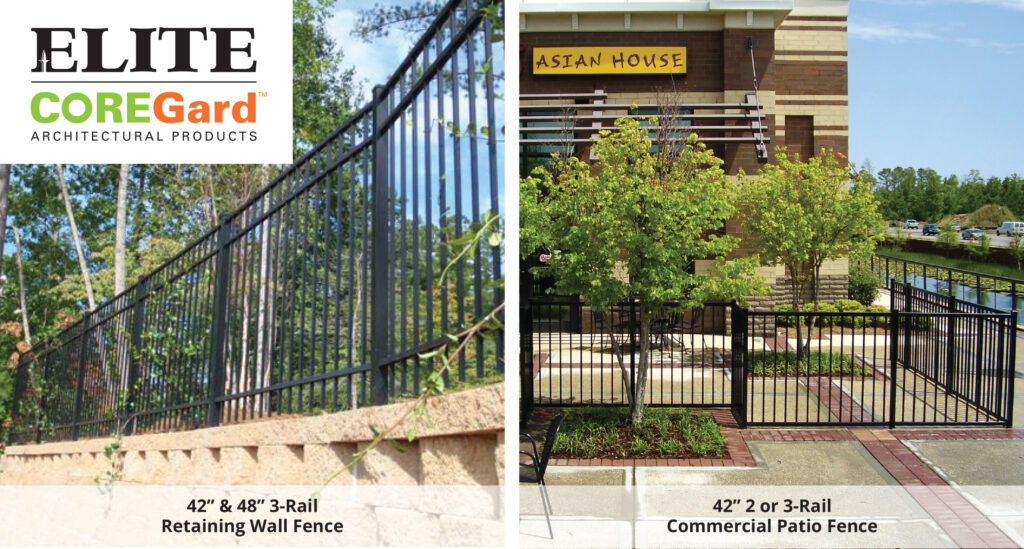
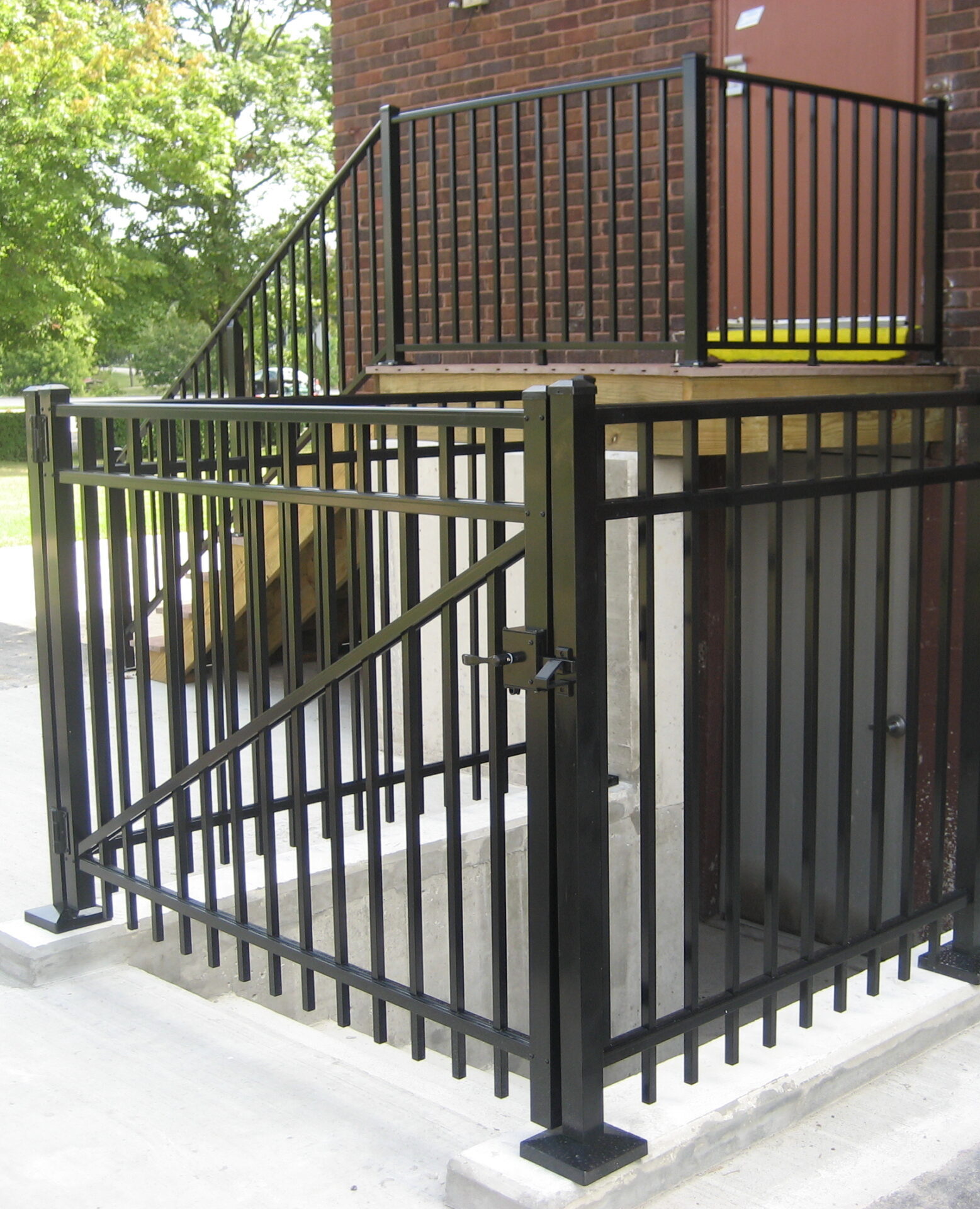
When FALL PROTECTION is paramount for a property, Elite’s FALLGard Perimeter Fence Systems deliver dependable performance. Part of the Elite COREGard Architectural Products brand of Elite Fence Products, FALLGard fences are certified through rigorous physical testing to meet ICC Chapter 16 and ASCE-7 requirements. FALLGard is engineered from heavy-duty aluminum components and built for high traffic, public environments such as retaining walls and commercial patios. FALLGard fence systems provide maximum security and protection without sacrificing the view.
Designed for long-lasting performance, FALLGard fences resist rusting, warping and cracking, all without the need for painting or ongoing maintenance. FALLGard fences are powder coated to exceed AAMA 2604 standards for superior durability. FALLGard fences backed by a limited lifetime warranty.
Engineered for TESTED Performance
Meets or Exceeds AICC Chapter 16 and ASCE-7 Requirements
3-Part Submittals Available
Applications: Retaining Walls, Rooftops and Commercial/Retail Patios
FALLGard Key Standards:
Fall protection railings (guardrails) must comply with local building codes like IBC/IRC for safety.
Strength: Must withstand at least 200 lbs of force applied downward or outward within 2 inches of the top edge, at any point, without failure.
Building Codes (e.g., IRC/IBC): Often for retaining walls over 30 inches high (measured from footing bottom to top of wall) to protect the public.
Also consult local codes.
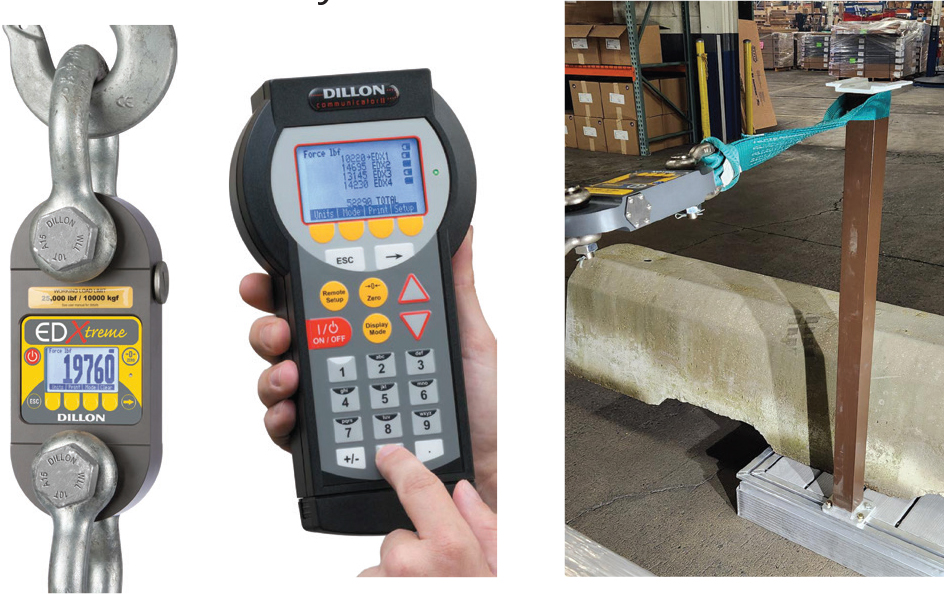
FALLGard Safety Testing:
Elite uses rigorous, top-tier testing to evaluate the quality, safety, and performance of our FALLGard Fence Systems
FALLGard Key Requirements:
ASCE 7-10 Section 4.5.1 — Handrail and Guardrail Load Requirements
ASCE 7-10, Section 4.5.1 specifies the minimum design loads for handrail and guardrail systems to ensure they can safely resist both concentrated and distributed loads.
Key Load Requirements:
Single Concentrated Load: The system must be designed to resist 200 lb applied in any direction at any point along the handrail or top rail
Uniform Distributed Load: The system must also resist 50 lb/ft applied in any direction along the handrail or top rail
In Fill and Panel Fillers: Intermediate rails (excluding the handrail) and panel fillers must withstand a horizontally applied normal load of 50 lb on an area not exceeding 12 in × 12 in including openings and spaces between rails.
Design Intent:
The 200 lb point load is intended to simulate a person pushing or leaning against the rail, while the 50 lb/ft uniform load simulates pedestrian traffic or incidental contact along the rail
The code focuses on strength rather than deflection, though deflection limits may be required by other standards or local codes
In Summary: ASCE 7-10 4.5.1 requires handrail/guardrail systems to resist a 200 lb point load in any direction and a 50 lb/ft uniform load (with exemptions for certain occupancies), plus specific requirements for intermediate rails and panel fillers, all to ensure structural safety and occupant protection.
IRC Chapter 16 — RESIDENTIAL Guards and Handrails
In the 2021 International Residential Code (IRC), guards and handrails are defined differently:
Guard — a vertical barrier to prevent accidental falls from elevated walking surfaces.
Handrail — a vertical member for grasping and stability when climbing stairs or ramps
Design Loads: IRC has long required 200 lb. in any direction at any point along the top for both guards and handrails This load must be resisted in all directions, including inward, to account for potential lateral forces
Key Takeaways:
Load Resistance: 200 lb. in all directions at the top of the guard or handrail.
Inspection: While push/pull tests are common, the 2021 IRC’s load requirements mean structural capacity must be verified to the code’s design load
IBC Chapter 10 — COMMERCIAL Guard and Handrail Requirements
IBC Chapter 10 (Means of Egress) sets out the code requirements for guards and handrails to prevent falls and provide guidance during vertical travel.
Guards (IBC §1015) Guards are required along open-sided walking surfaces where there is a vertical drop greater than 30 inches (762 mm) within 36 inches (914 mm) horizontally of the open edge
Minimum height: 42 in (1,067 mm) in all occupancies, measured vertically from the adjacent walking surface
Exceptions: Loading docks, audience side of stages, raised platforms for entertainment, fixed-guideway transit station platforms, and similar functional openings
Strength: Must comply with Section 1607.9 (typical design loads: 50 plf along top, 200 lb concentrated force)
Openings: Maximum sphere opening size is 4 in (102 mm)
ADA Secondary Handrails (IBC §1014)
Handrails are required for stairways, ramps, stepped aisles, and ramped aisles
Height:
Stairs: 34–38 in (864–965 mm) above the nosing of the tread
Ramps: 34–38 in above the ramp surface
Graspability: Smooth, rounded, and free of sharp edges; must be accessible to users
Continuity: Uninterrupted along the length of the stair or ramp; intermediate handrails may be required for wide stairways
Fittings: Should prevent rotation and allow for comfortable gripping
Strength: Must comply with Section 1607.9 for structural attachment
Key Differences
Guards respond to fall exposure (drop > 30 in within 36 in) and are vertical barriers.
Handrails respond to the presence of stairs or ramps and are horizontal elements for guidance and support.